Mold Testing 101: Air Sampling vs. Surface Sampling Explained
Air sampling, surface swabs, tape lifts, and moisture readings all measure different things. Here's which test answers which question.
"Mold testing" isn't a single procedure — it's a family of different sampling methods, each suited to a different question. Understanding the difference helps you avoid paying for the wrong test.
Non-viable air sampling (spore trap)
A calibrated pump draws a known volume of air through a cassette that captures spores on a sticky slide, which is then analyzed under a microscope. This is the most common test for indoor air quality concerns because it measures what occupants are actually breathing and compares indoor spore counts and species against an outdoor control sample. It answers: "Is the air in this room carrying elevated mold spore levels, and of what type?"
Viable (culturable) air sampling
Instead of counting all spores, this method captures live spores that are then cultured in a lab to identify exactly which species are viable and growing. It takes longer to get results (several days to a couple of weeks) but provides more precise species identification, which can matter for health-related concerns or legal documentation.
Surface sampling: swab and tape lift
When you can see visible growth and want to know exactly what species it is, a swab (for wet or textured surfaces) or clear tape lift (for flat, dry surfaces) collects a physical sample directly from the growth for lab identification. This answers: "What exactly is this visible colony?" rather than a broader air-quality question.
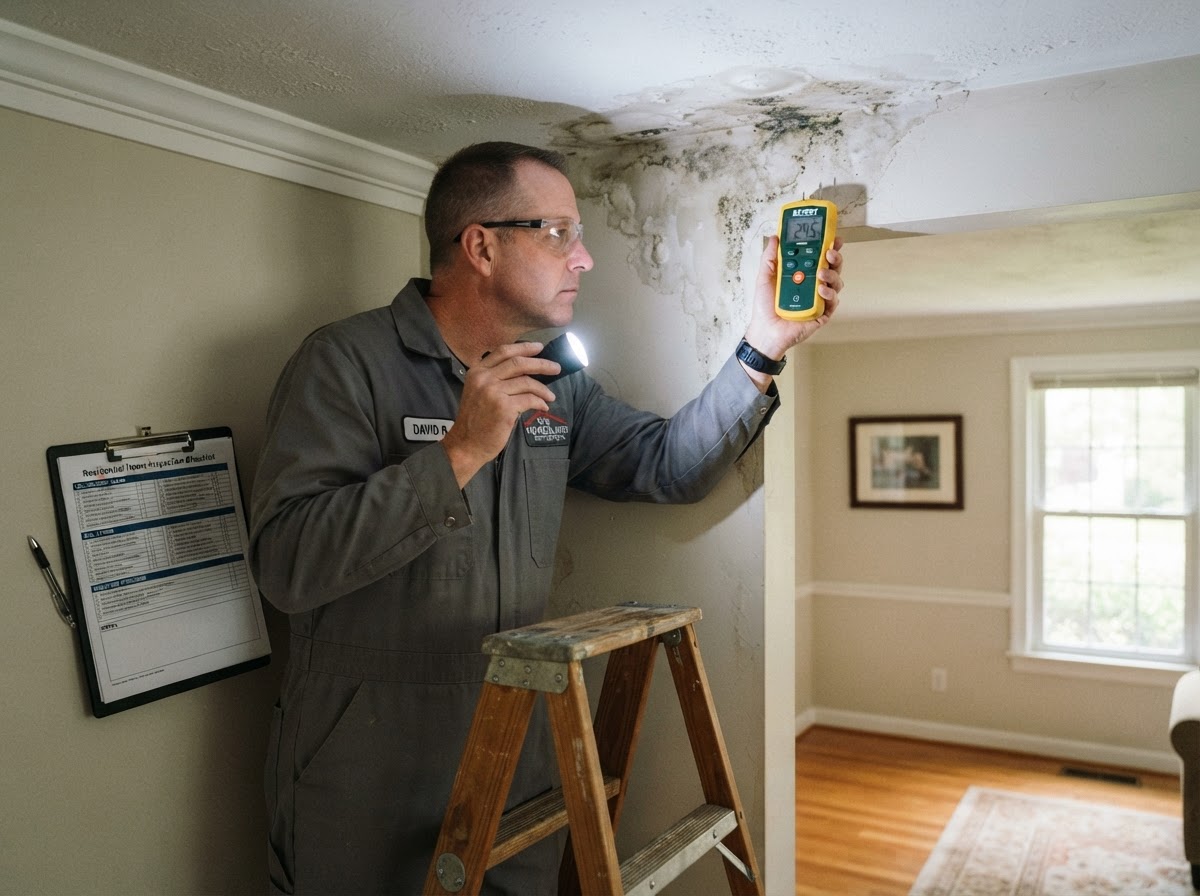
Moisture content readings
Not technically a mold test, but often paired with sampling — a moisture meter measures water content in building materials to identify ongoing sources and confirm a space is fully dry after remediation. This is the step most often skipped by inexperienced inspectors, and it's critical for verifying that a remediation actually solved the underlying problem.
Which test do you actually need?
- Visible mold with a known source (a leak you've already found): sampling is optional; remediation is the priority
- No visible mold but a musty smell or symptoms: air sampling (spore trap) is usually the right first step
- Visible growth of unknown type: surface sampling (swab or tape lift)
- Real estate transaction or insurance documentation: air sampling with an outdoor control, professionally reported
- Confirming remediation success: post-remediation clearance air sampling, typically required before re-occupying a contained space
Common Questions About Mold Testing
How much does mold testing cost?
Standalone air or surface sampling typically ranges from $200-$600 depending on the number of samples and lab turnaround speed, separate from any inspection fee. Post-remediation clearance testing is often bundled into a remediation project's total cost.
How long do lab results take?
Standard turnaround for spore trap or surface samples is typically 2-5 business days; culture-based (viable) sampling can take 7-14 days since it requires incubation time.
Do I need testing before hiring a remediation company?
Not always. If mold is visually confirmed, many reputable companies will scope remediation directly without requiring testing first, since the presence of visible mold is itself sufficient to justify remediation regardless of species.
Need Help With mold testing Right Now?
Our network of certified California mold specialists can inspect, test, and remediate — starting with a free estimate.
Mold Removal Services Near You
Get a Free Mold Inspection Estimate
Certified local specialists serving every California community.