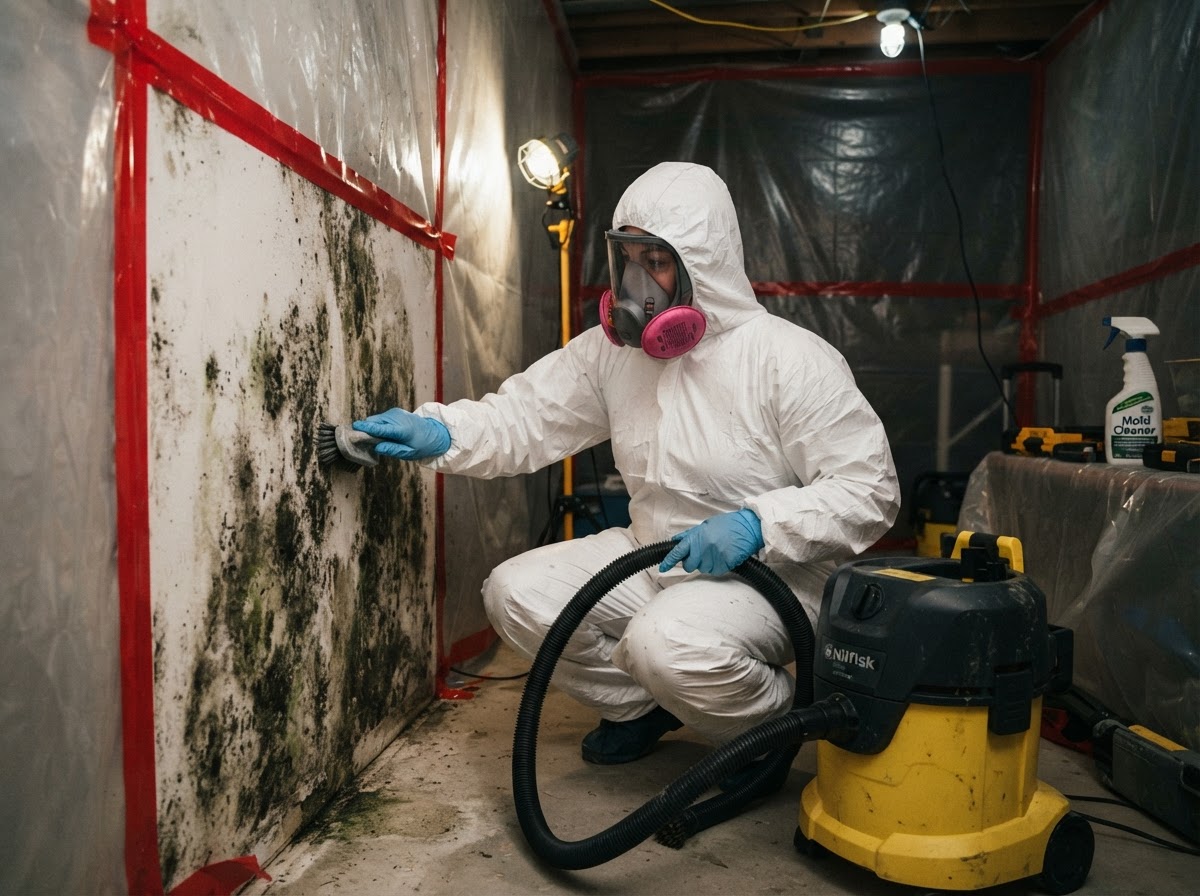
Black Mold Removal
Specialized containment and removal protocols for Stachybotrys chartarum and other high-risk toxigenic mold species.
About Black Mold Removal
"Black mold" most often refers to Stachybotrys chartarum, a slow-growing, greenish-black mold that thrives on cellulose-rich, chronically wet materials like drywall paper, ceiling tile, and wood. While not every black-colored mold is Stachybotrys, any suspected toxigenic mold growth warrants a more conservative removal protocol due to the mycotoxins some strains can produce.
Our black mold removal process uses enhanced PPE (full-face respirators, Tyvek suits), stricter containment standards, and dedicated HEPA air filtration exhausted outside the containment zone. We never dry-sand or dry-brush suspected Stachybotrys colonies, since disturbing dry colonies dramatically increases airborne spore counts.
Because black mold frequently signals a chronic, long-standing moisture problem rather than a single recent event, our assessment always includes a full investigation of the underlying water source — a slow plumbing leak, roof failure, or persistent condensation — to prevent recurrence after remediation.
Our Process
Confirm Species
Suspected black mold is sampled and lab-confirmed before finalizing the remediation protocol.
Enhanced Containment
Full physical containment with negative air pressure and sealed entry/exit (decon chamber) protocols.
Careful Removal
Contaminated materials are misted to suppress spore release, then bagged in place and removed without dry disturbance.
Source Repair & Clearance
The moisture source is corrected, followed by independent air clearance testing before the space is reopened.
Black Mold Frequently Asked Questions
Is black mold actually dangerous?
Some Stachybotrys strains can produce mycotoxins associated with respiratory irritation and allergic reactions, particularly in sensitive individuals, infants, the elderly, and those with asthma or compromised immune systems. Any suspected toxigenic mold should be handled with professional containment.
Can I remove black mold myself?
The EPA and CDC recommend professional remediation for mold-affected areas larger than roughly 10 square feet, and always for suspected Stachybotrys, due to the risk of spreading spores during DIY removal without proper containment.
How do I know if it's really black mold and not just dark-colored mold?
Visual identification alone is unreliable — many common mold species appear black or dark green. Lab analysis of a sample is the only definitive way to confirm Stachybotrys chartarum.
Black Mold Available in These California Cities
Get a Free Black Mold Estimate
Fast scheduling, transparent pricing, and certified local specialists anywhere in California.