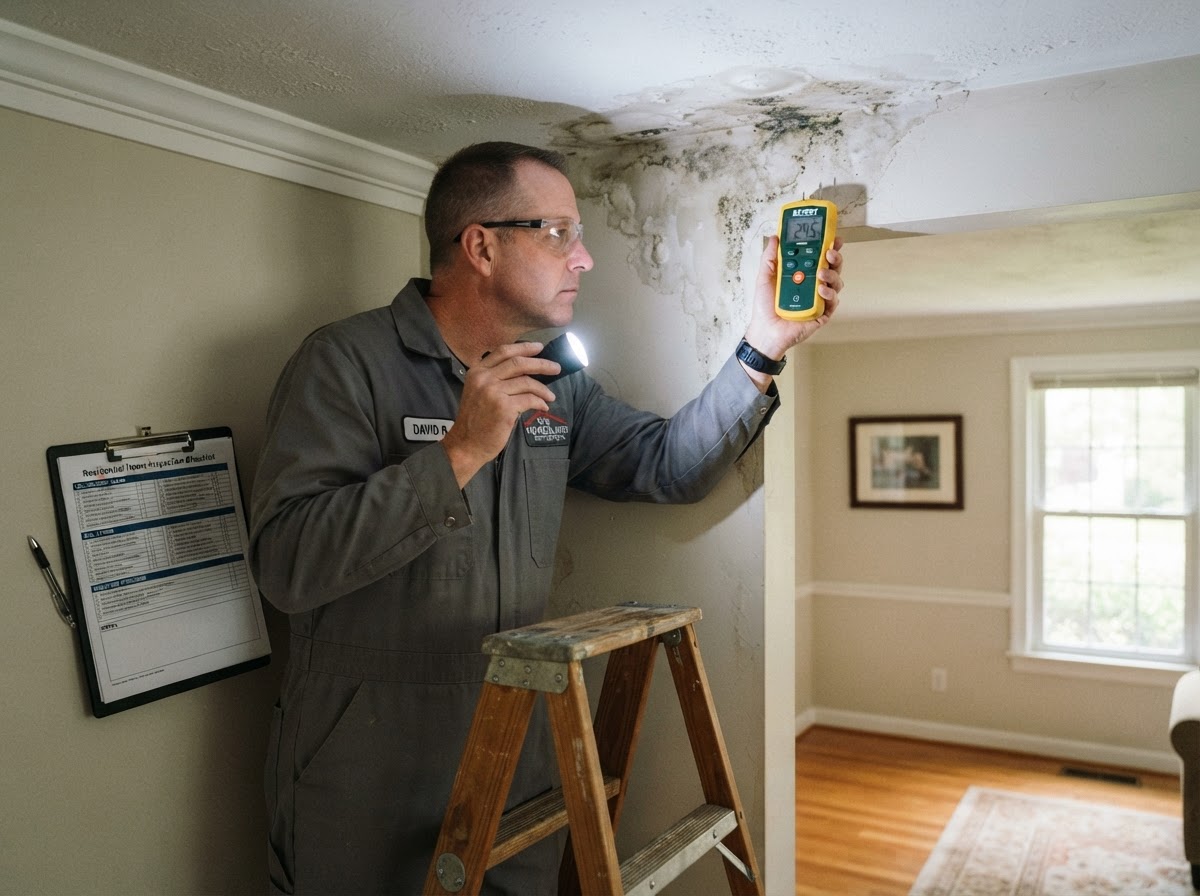
What to Expect During a Professional Mold Inspection
A walkthrough of what a certified inspector actually does — from the moisture meter to the final report — so you know what you're paying for.
Most homeowners have never had a mold inspection before, and it's reasonable to want to know what actually happens during the one to two hours an inspector spends at your property. Here's the real sequence, not the marketing version.
Before the inspector arrives
A good inspection starts with a short intake conversation: what prompted the concern (a smell, a visible stain, allergy symptoms, a pending home sale), whether there's a known history of leaks, and which areas you'd like prioritized. This context shapes where the inspector spends the most time.
The visual walkthrough
The inspector walks the entire accessible property — not just the room you're worried about. Bathrooms, kitchens, laundry areas, crawl spaces, attics, and any area with a history of leaks get particular attention, since these are the highest-probability locations for hidden moisture. In California specifically, inspectors pay close attention to areas prone to regional risks: crawl space vapor barriers in older coastal homes, attic ventilation in homes with a history of roof leaks, and slab moisture in homes with a known plumbing history.
Moisture mapping
Using a pin-type or pinless moisture meter, the inspector checks materials — drywall, baseboards, subfloor, framing — for elevated moisture content relative to a dry baseline. This step frequently finds problems before any mold is visible, since materials can hold excess moisture for weeks before visible growth appears.
Thermal imaging
Infrared cameras detect temperature differentials that often indicate moisture behind finished surfaces like drywall or ceilings, without any demolition. It's not a substitute for moisture meter readings but complements them by helping locate the boundaries of a wet area quickly.
Sampling, if warranted
Not every inspection includes lab sampling. If mold is visually confirmed and the moisture source is identified, sampling may not change the remediation plan and can be skipped to save cost. Sampling becomes valuable when mold isn't visible but is suspected (odor, symptoms, prior water history), when documentation is needed for insurance or a real estate transaction, or when post-remediation clearance testing is required.
The report
You should receive a written report — not just a verbal summary — that documents findings with photos, moisture readings, any lab results, and a recommended scope of work if remediation is needed. This report is also what you'll want on file if the issue later becomes relevant to an insurance claim or home sale disclosure.
Common Questions About Mold Inspection
How long does a mold inspection take?
Most residential inspections take 60-120 minutes depending on property size and the number of areas of concern. Larger homes or commercial buildings can take longer.
Should I clean visible mold before the inspector arrives?
No — leave it as-is. Cleaning or disturbing mold before inspection can remove evidence the inspector needs to assess the extent and source of the problem, and disturbing dry mold can actually release more spores into the air.
Do I need to be home during the inspection?
It's not required, but we recommend it. Walking the property with your inspector helps you understand exactly what was found, why it happened, and what questions to ask about next steps.
Need Help With mold inspection Right Now?
Our network of certified California mold specialists can inspect, test, and remediate — starting with a free estimate.
Mold Removal Services Near You
Get a Free Mold Inspection Estimate
Certified local specialists serving every California community.