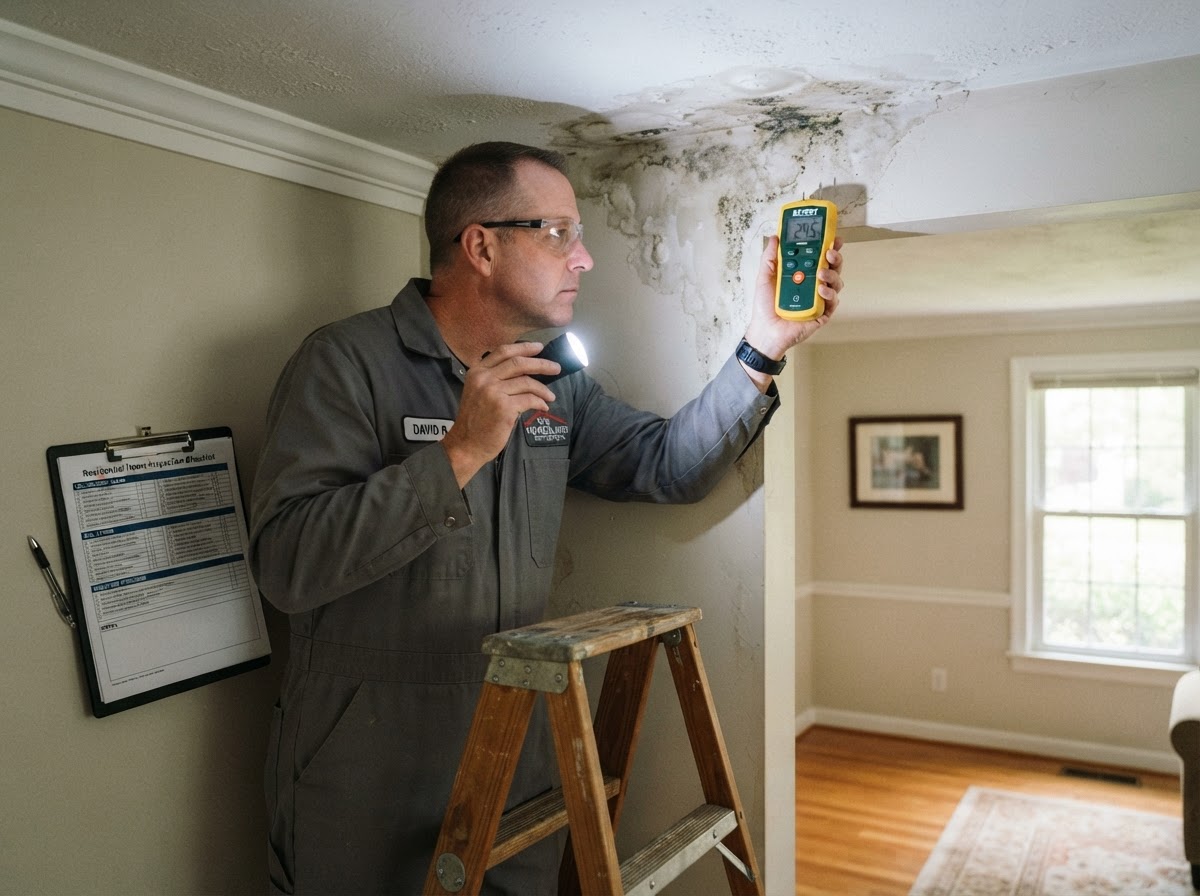
Crawl Space Mold: Causes, Risks, and Fixes for California Homes
Crawl spaces are the most commonly overlooked mold source in California homes — mostly because nobody looks at them until there's a problem.
Crawl spaces are, by a wide margin, the most common location we find significant undiscovered mold during routine inspections — largely because they're the one part of a home almost nobody checks unless they're specifically looking for a problem.
Why crawl spaces are structurally prone to moisture
A crawl space sits directly above bare or minimally covered soil, which constantly releases ground moisture through evaporation. Without a proper vapor barrier, that moisture migrates upward and condenses on cooler surfaces — floor joists, subfloor, and insulation — creating a chronically damp environment even in homes that seem dry everywhere above ground.
Regional patterns across California
North Coast and Bay Area crawl spaces face near-constant elevated humidity from marine influence, often keeping conditions favorable for mold growth for most of the year. Central Valley crawl spaces deal with seasonal groundwater rise and tule fog humidity in winter. Sierra foothill crawl spaces face spring snowmelt saturation. In every case, the underlying vulnerability — a damp, poorly ventilated space directly above soil — is the same; only the seasonal timing differs.
Warning signs from inside the house
- A persistent musty smell, especially noticeable near floor level or when the HVAC system first turns on
- Buckling or cupping hardwood floors, which often indicates subfloor moisture from below
- Unexplained allergy or respiratory symptom flare-ups that improve when away from home
- Visible sagging or discoloration on the underside of subfloor if you've ever looked into the crawl space
- Higher-than-expected indoor humidity readings even with windows closed and AC running
What proper crawl space moisture control looks like
A correctly installed ground vapor barrier (typically 6-10 mil polyethylene sheeting, sealed at seams and foundation walls) is the foundation of crawl space moisture control. Combined with adequate foundation vents or, in more advanced setups, a sealed and mechanically ventilated "conditioned" crawl space design, this addresses the root moisture source rather than just treating visible mold after it appears.
Why crawl space remediation requires specific safety protocols
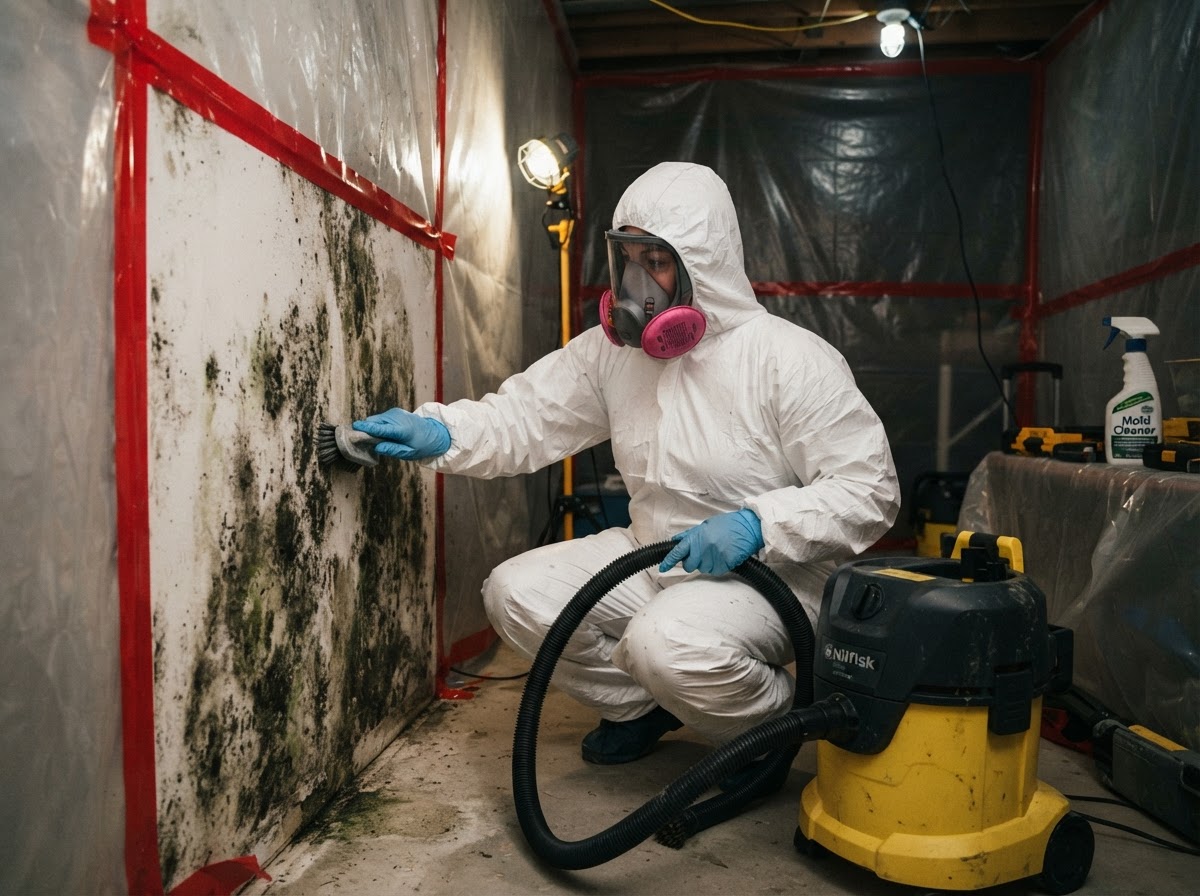
Crawl space work involves confined-space considerations, limited ventilation during the work itself, and often direct contact with contaminated insulation or subfloor material — which is why this is one property area where professional remediation with proper containment and respiratory protection is especially important, rather than DIY cleanup.
Common Questions About Crawl Space Mold
How often should a crawl space be inspected?
For homes without known issues, every 2-3 years is reasonable; homes in higher-risk regions (North Coast, Bay Area, Sierra foothills) or with any history of moisture concerns benefit from annual checks, ideally after the wet season.
Can I install a vapor barrier myself?
Basic vapor barrier installation is within reach for a handy homeowner, but proper sealing at seams, foundation walls, and around piers or supports is where most DIY installations fail — gaps allow ground moisture to bypass the barrier entirely.
Does crawl space mold affect indoor air quality upstairs?
Yes, frequently. Air pressure differences (the "stack effect") often pull crawl space air upward into living spaces through gaps around plumbing, wiring, and flooring seams, which is why crawl space mold is a legitimate indoor air quality concern, not just a structural one.
Need Help With crawl space mold Right Now?
Our network of certified California mold specialists can inspect, test, and remediate — starting with a free estimate.
Mold Removal Services Near You
Get a Free Mold Inspection Estimate
Certified local specialists serving every California community.