Basement Mold in California: Why It Happens Even Without a True Basement
Most California homes don't have basements — but below-grade rooms, garages, and finished lower levels face nearly identical mold risks.
Traditional basements are less common in California than in much of the country, largely due to different foundation practices and seismic building considerations. But we still field plenty of calls about "basement mold" — usually referring to below-grade rooms, hillside walk-out levels, finished garages, or partially subterranean storage areas, most commonly in Bay Area, Sierra foothill, and North Coast homes built into sloped lots.
Why below-grade spaces are naturally higher risk
Any space with walls in contact with surrounding soil faces constant hydrostatic pressure pushing groundwater toward the structure, especially during and after California's winter storm season. Without proper waterproofing, this moisture migrates through concrete via capillary action even without a visible crack or active leak — which is why below-grade rooms can develop mold and musty odors even when no one recalls a specific water event.
Common sources we find in California below-grade spaces
- Hairline foundation cracks that allow slow water seepage during heavy rain
- Inadequate exterior grading or missing gutters directing water toward foundation walls
- Sump pumps that have failed or were never installed in homes that need one
- Condensation on cool concrete walls and floors when warm, humid air contacts them
- Storage boxes and furniture placed directly against exterior walls, trapping moisture and blocking airflow
Wine cellars: a California-specific case
Wine Country properties frequently include below-grade wine storage, which is intentionally kept humid (50-70% relative humidity is often ideal for wine aging) — creating a genuine tension between wine preservation and mold prevention. These spaces need dedicated ventilation and moisture management specifically designed around that humidity target, rather than generic basement drying advice.
What effective remediation looks like
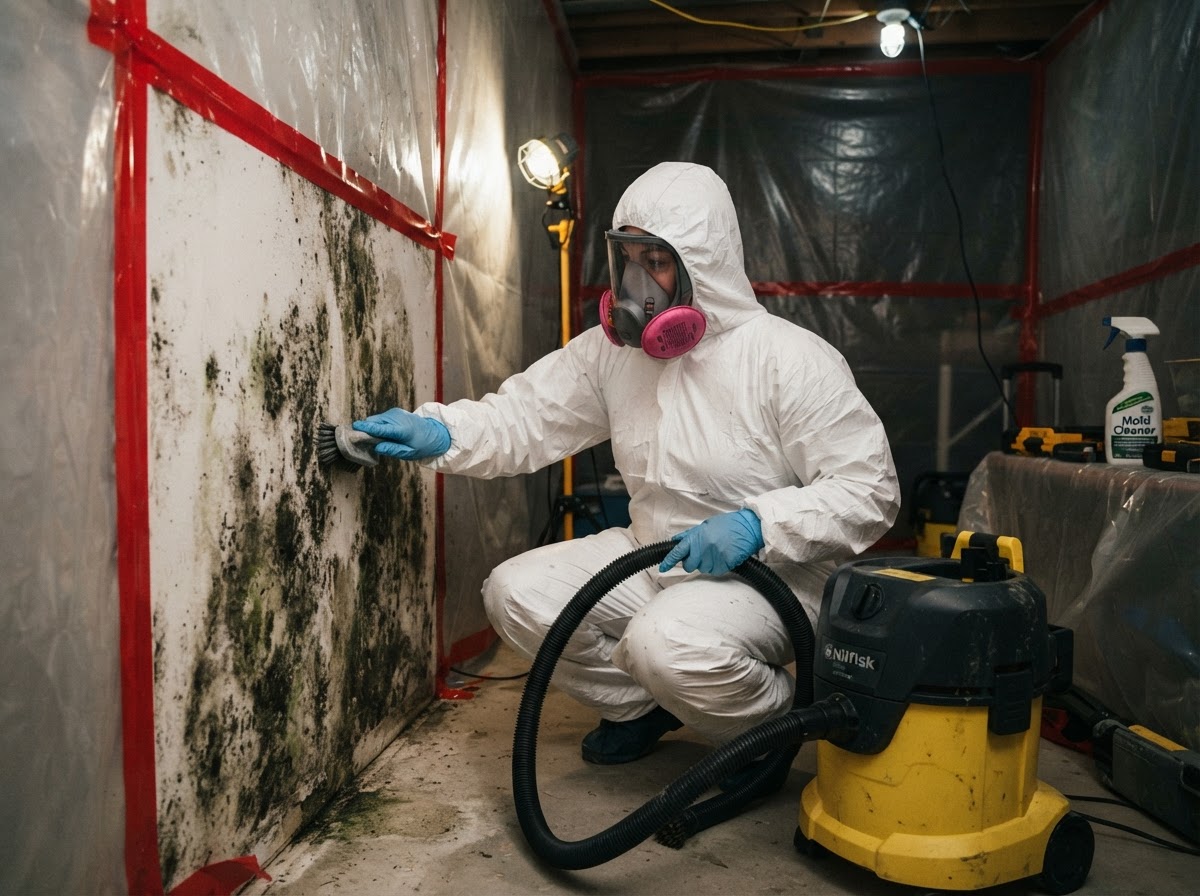
Below-grade mold remediation nearly always needs to address the water intrusion source, not just clean visible growth — otherwise the problem returns within a season. This often means exterior grading correction, French drain installation, sump pump repair or installation, or interior waterproofing membrane application in addition to standard containment and remediation protocols.
Common Questions About Basement Mold
Do California homes commonly have true basements?
Less commonly than in much of the country — slab-on-grade and crawl space foundations are far more typical, though below-grade rooms, hillside walk-out levels, and finished garages present similar mold risks and are common enough that we treat them as a distinct property type.
Can a dehumidifier alone solve below-grade mold?
A dehumidifier helps manage ambient humidity but rarely solves the underlying problem if there's active water intrusion through walls or flooring — it treats the symptom, not the source.
How do I know if my below-grade space has a water intrusion problem versus just high humidity?
Visible efflorescence (white mineral deposits) on concrete, damp spots that appear after rain specifically, or moisture meter readings that spike near walls versus the center of the room all suggest active intrusion rather than ambient humidity alone.
Need Help With basement mold Right Now?
Our network of certified California mold specialists can inspect, test, and remediate — starting with a free estimate.
Mold Removal Services Near You
Get a Free Mold Inspection Estimate
Certified local specialists serving every California community.