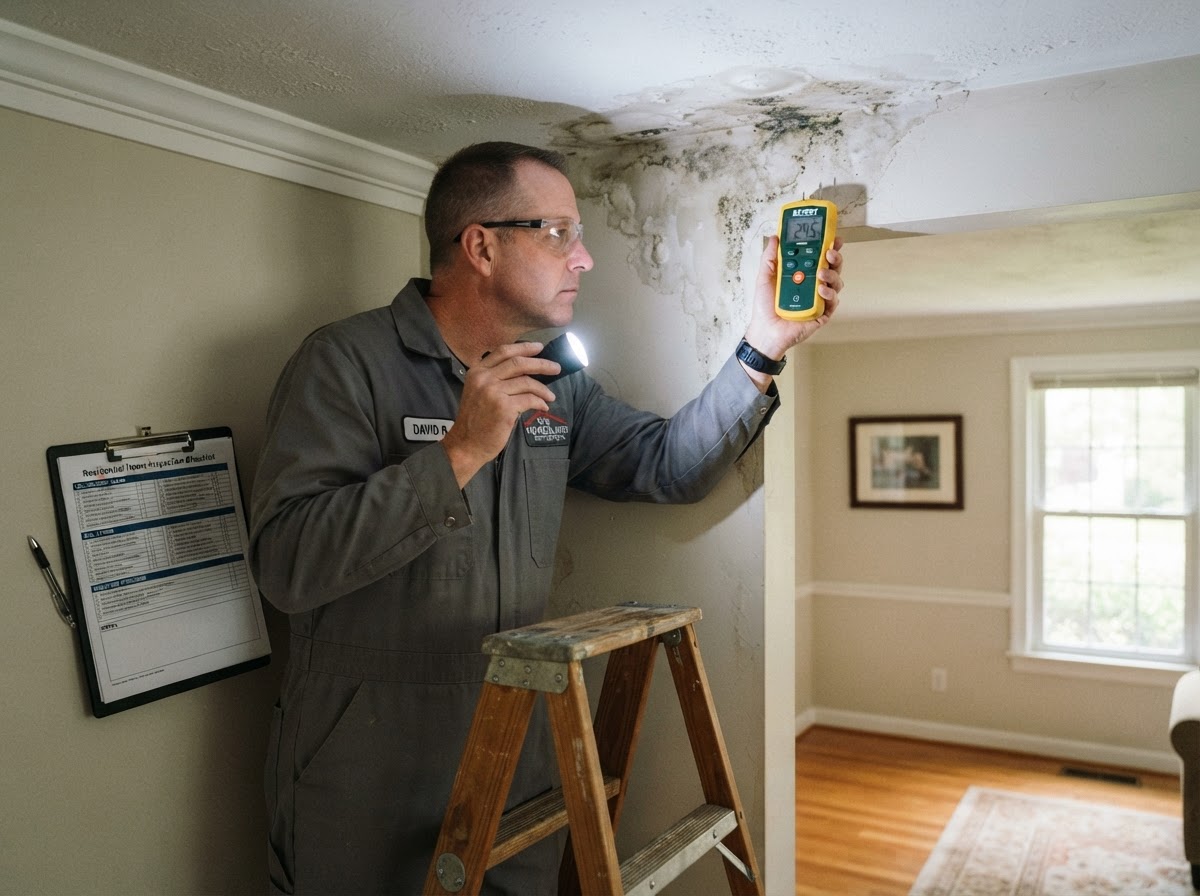
Attic Mold in California: Common Causes and Warning Signs
Attic mold rarely comes from rain leaking through the roof directly — it's almost always a ventilation or insulation problem in disguise.
When homeowners find mold in their attic, the first assumption is usually a roof leak. Sometimes that's right — but in our experience across California properties, the more common cause is inadequate ventilation combined with warm, moist air migrating up from living spaces below, especially in winter.
The mechanism: warm air meets a cold roof deck
Warm, moisture-laden indoor air (from cooking, showers, breathing, and misdirected bathroom exhaust fans) rises and finds its way into the attic through small gaps around light fixtures, attic hatches, and plumbing penetrations. When that warm air contacts the cold underside of the roof deck during winter nights, it condenses — creating exactly the kind of chronic, low-grade moisture that mold needs, entirely independent of any roof leak.
Why this is especially common in California
Homes in cooler regions — the Bay Area, North Coast, Sierra foothills, and higher-elevation North State properties — see the biggest day-to-night and indoor-outdoor temperature swings that drive this condensation cycle. But we also see it in Central Valley homes during winter tule fog season, when nighttime temperatures drop enough to trigger the same effect.
The bathroom fan problem
This deserves its own callout because it's so common: many older California homes have bathroom exhaust fans that vent directly into the attic space instead of through a duct to the exterior. Every shower effectively pumps humid air straight into the attic, and over months or years this alone can be enough to establish mold on roof sheathing, even with otherwise adequate attic ventilation.
Ridge and soffit ventilation balance
Proper attic ventilation relies on a balanced system: soffit vents (intake, low on the roof) and ridge or gable vents (exhaust, high on the roof) working together to keep air moving and prevent moisture from settling. Insulation that's been blown in and inadvertently blocks soffit vents is a frequent, easily overlooked cause of attic moisture buildup we find during inspections.
Warning signs to check for
- Dark staining or discoloration on the underside of roof sheathing, especially near the ridge
- Frost or visible moisture on nail heads protruding through the roof deck during cold mornings
- A musty smell noticeable when opening the attic access hatch
- Compressed or water-stained insulation, especially near vents or roof penetrations
- Visible mold on stored cardboard boxes or wood items kept in the attic
Common Questions About Attic Mold
How do I know if my bathroom fan vents outside or into the attic?
From the attic, follow the ductwork from the fan housing — it should run continuously to a roof or wall vent cap on the exterior. If the duct simply ends in the attic space (or there's no duct at all), it's venting directly into your attic.
Does attic insulation cause mold?
Insulation itself doesn't cause mold, but insulation that blocks soffit vents, or insulation that gets wet and stays wet, both contribute significantly to attic moisture problems.
Is attic mold dangerous if I never go up there?
Attic air exchanges with living space air more than most people realize, through the same small gaps that let moisture rise in the first place — so attic mold can still affect indoor air quality even in a rarely-accessed space.
Need Help With attic mold Right Now?
Our network of certified California mold specialists can inspect, test, and remediate — starting with a free estimate.
Mold Removal Services Near You
Get a Free Mold Inspection Estimate
Certified local specialists serving every California community.