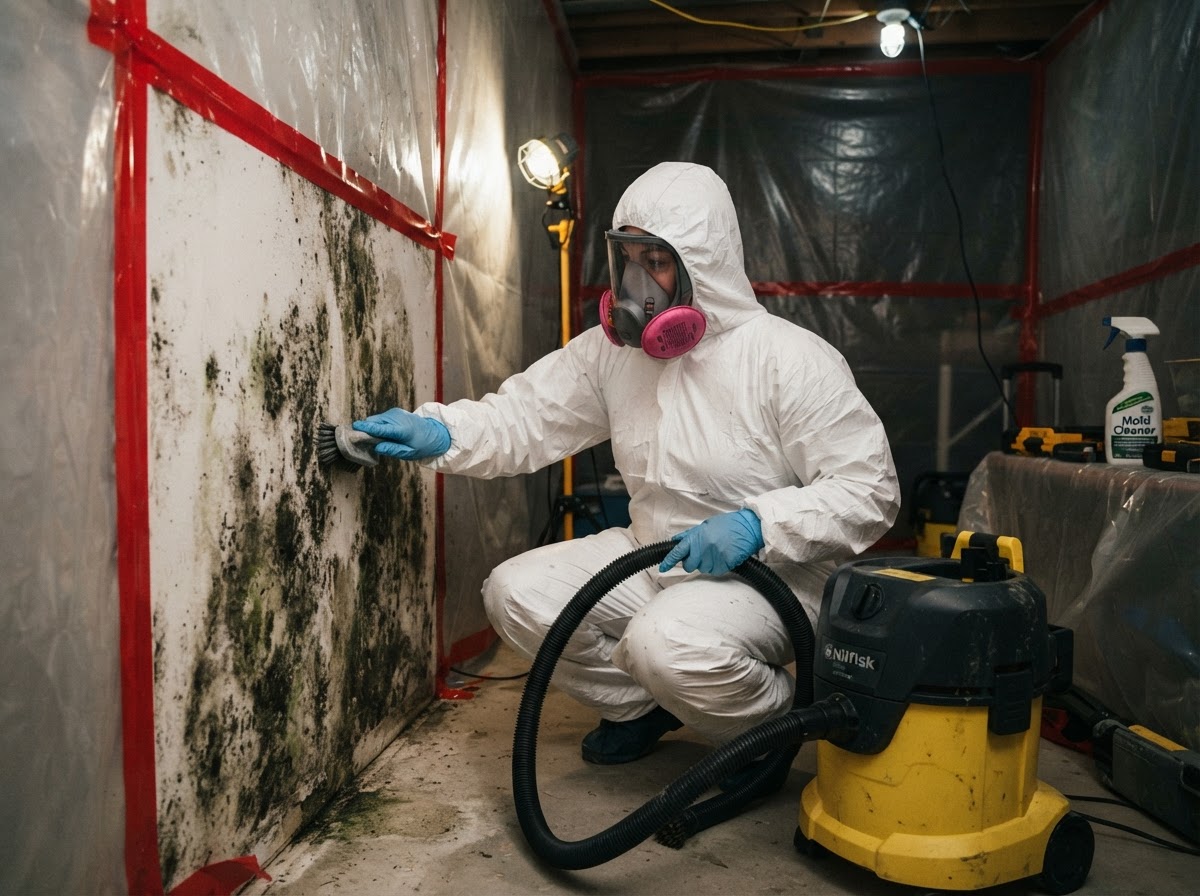
Stopping Bathroom Mold for Good: A California Homeowner's Guide
Bathrooms are the single most common room for mold complaints. Here's why it keeps coming back — and what actually breaks the cycle.
Bathroom mold is the most common residential mold complaint we receive statewide, and it's also the one homeowners most often try to solve themselves with bleach and a scrub brush — only to see it return within weeks. Understanding why it comes back is the key to actually stopping it.
Why bleach alone doesn't solve the problem
Bleach can kill surface mold on non-porous surfaces like tile and glass, but it does nothing to address the underlying moisture source, and it doesn't penetrate porous materials like grout, caulk, or drywall where mold roots can persist below the visible surface. If the humidity source that created the mold in the first place isn't addressed, regrowth is essentially guaranteed.
The three most common root causes
- Inadequate ventilation — no exhaust fan, an undersized fan, or a fan that vents into the attic instead of outdoors
- Failed or deteriorated caulk and grout allowing water to migrate behind tile and into wall cavities
- Poor habits — not running the fan during and after showers, or running it for too short a time to fully clear humidity
Fixing ventilation the right way
A bathroom exhaust fan should be sized appropriately for the room (a common rule of thumb is roughly 1 CFM per square foot of floor area, with a minimum of about 50 CFM), vent to the exterior (not the attic), and run for at least 20-30 minutes after showering — a timer switch or humidity-sensing fan automates this reliably where manual habits fall short.
Behind-the-tile risk
Shower and tub surrounds are a common hidden mold location because water intrusion through failed grout or caulk happens gradually and invisibly until drywall or backer board behind the tile is significantly saturated. If you notice loose or cracked tile, soft spots near the tub, or a musty smell without visible surface mold, this is the most likely explanation.
Practical daily habits that make the biggest difference
- Run the exhaust fan during every shower and for 20-30 minutes after
- Squeegee shower walls after use to reduce standing water
- Leave the shower door or curtain open slightly to promote air circulation and faster drying
- Wash and replace fabric shower curtains or liners regularly
- Re-caulk tub and shower seams at the first sign of cracking, before water can migrate behind them
Common Questions About Bathroom Mold
Is it safe to clean small amounts of bathroom mold myself?
For small areas (under roughly 10 square feet) on non-porous surfaces like tile and glass, cleaning with a proper mold-specific cleaner while wearing gloves and ventilating the room is generally reasonable. Recurring mold, mold on porous surfaces (drywall, grout, caulk), or any area larger than that warrants a professional assessment.
Why does mold keep coming back even after I clean it?
Recurring mold almost always means the underlying moisture source — usually inadequate ventilation — hasn't been addressed. Cleaning removes visible growth but not the conditions that allowed it to grow in the first place.
Should I remove exhaust fan mold myself?
Fan housings can accumulate dust and mold that then gets blown into the room every time the fan runs. This is a reasonable DIY cleaning task, but a fan that's chronically damp or moldy inside often points to a duct that's disconnected or terminating in an unventilated space.
Need Help With bathroom mold Right Now?
Our network of certified California mold specialists can inspect, test, and remediate — starting with a free estimate.
Mold Removal Services Near You
Get a Free Mold Inspection Estimate
Certified local specialists serving every California community.