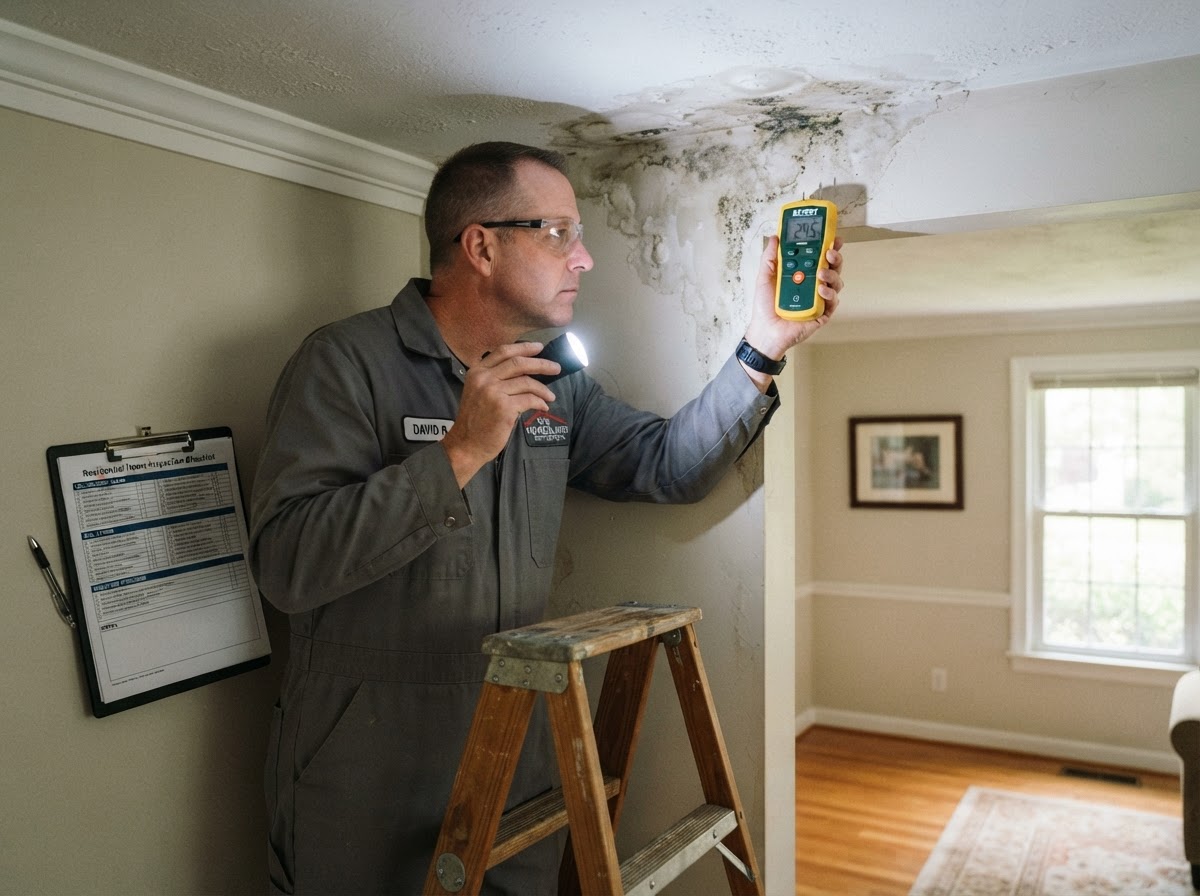
Why Mold Develops in Cowan Properties
In practical terms for Cowan residents: Winter tule fog blankets the valley floor for weeks at a time, driving up humidity around foundations and irrigation-adjacent homes, while flat terrain and aging flood-irrigation infrastructure increase the risk of water intrusion after storms. A Cowan property that seems dry on the surface can still be harboring moisture problems in crawl spaces, attics, or wall cavities that only a trained inspector will catch.
Across Cowan, the property mix leans toward a mix of housing types, built during a period defined by a mix of mid-century and newer construction. That combination of age and density is exactly what our teams factor in before ever setting foot on a property for an inspection.
Common Mold Risk Factors in Cowan
- Sudden intense storm events overwhelming aging residential roofing
- Older flood-irrigation-adjacent properties with elevated foundation moisture
- Extended summer heat driving heavy AC condensate production around ductwork
- Agricultural-adjacent parcels with well water and higher ambient soil moisture
Mold & Water Damage Services Available in Cowan
Indoor Air Quality Testing in Cowan
Comprehensive IAQ assessment covering mold spores, VOCs, and ventilation performance.
Moisture & Leak Detection in Cowan
Non-invasive thermal imaging and moisture mapping to locate hidden leaks before they cause structural or mold damage.
Insurance Claim Assistance in Cowan
Documentation, scope development, and adjuster coordination to support your water damage or mold insurance claim.
Mold Health Risk Assessment in Cowan
Guidance connecting suspected mold exposure to symptoms, with referrals for medical and environmental follow-up.
Cowan Mold Removal FAQs
How common is mold in Cowan homes?
Mold is a regular concern throughout Cowan and the broader Stanislaus County area because of long, hot, dry summers paired with cool, foggy winters and periodic flooding from Sierra snowmelt and winter storms. While not every property develops a mold problem, the combination of local climate and building age means it's one of the more common issues our inspectors find during routine property assessments in the area.
What time of year is mold most likely to develop in Cowan?
Cowan's mold season generally tracks the region's wet-weather pattern (9-15 inches annually, with dense tule fog in winter), but that's only half the picture — a slow plumbing leak or a poorly vented bathroom can start a mold colony in Cowan in the middle of the driest summer just as easily as during winter storms.
Do you offer mold inspection and removal services throughout Cowan?
Absolutely — Cowan is fully within our Stanislaus County service area, alongside neighboring communities like Modesto and Turlock. Every job is scoped to the property in front of us, whether that's a single-family home, a multifamily building, or a commercial space.
How quickly can someone inspect a property in Cowan?
For most non-emergency requests in Cowan, inspections are typically scheduled within 24-48 hours. Active leaks, visible large-scale mold growth, or situations involving vulnerable occupants can qualify for expedited or same-day emergency response.
Is mold remediation in Cowan covered by homeowners insurance?
Coverage hinges on the source of the moisture. A sudden covered loss — a burst pipe, a failed water heater — is usually covered up to a mold sub-limit under most California homeowners policies. Gradual issues, like a slow roof leak ignored for months, are usually excluded. Either way, our Cowan inspection reports are written with insurance documentation in mind.
Get a Free Mold Inspection Estimate in Cowan
Local, certified mold specialists serving Cowan and all of Stanislaus County — fast scheduling, transparent pricing, and documentation for insurance if you need it.