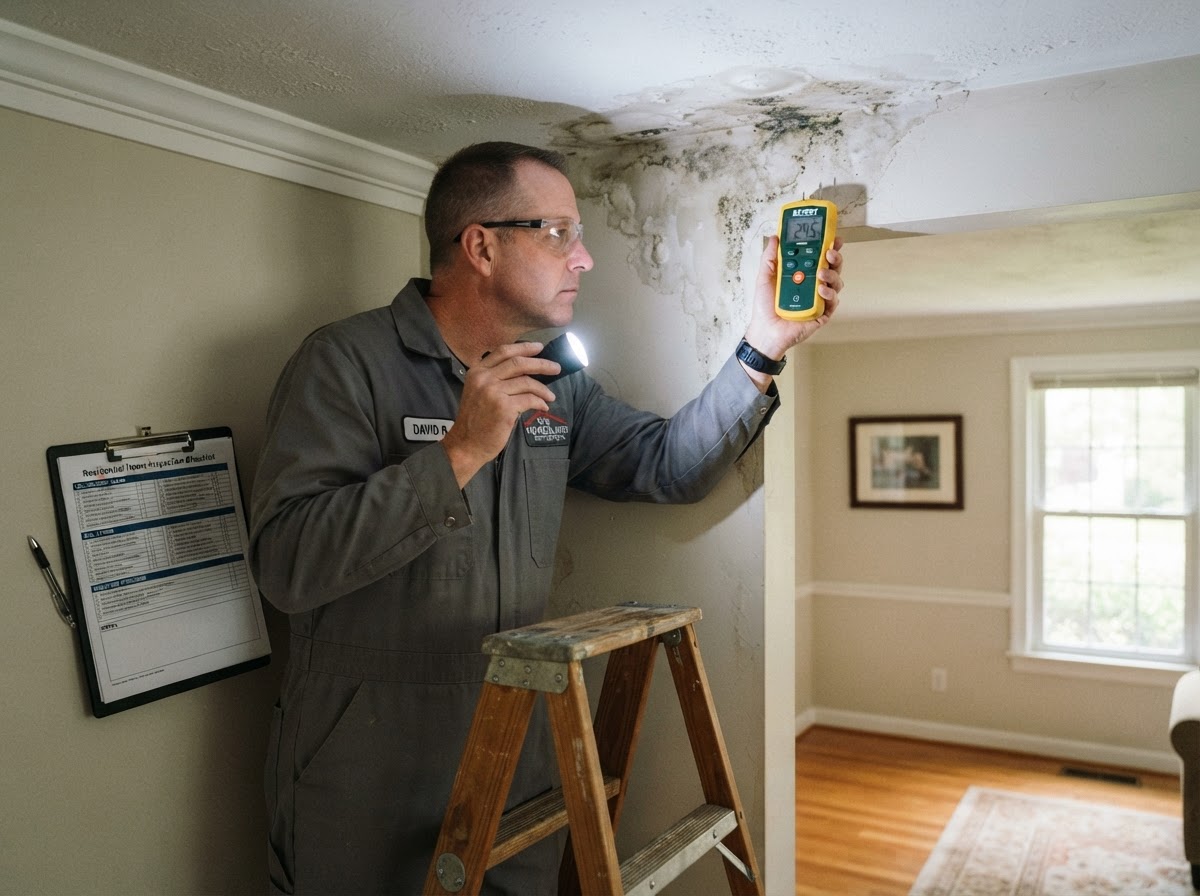
Moisture & Leak Detection
Non-invasive thermal imaging and moisture mapping to locate hidden leaks before they cause structural or mold damage.
About Moisture & Leak Detection
Many of the worst mold problems we encounter trace back to a slow, hidden leak that went undetected for months — a slab leak, a failed shower pan liner, or a slow roof leak with no visible interior staining yet. Moisture and leak detection uses non-invasive tools to find these hidden sources before they cause extensive damage.
Our detection toolkit includes infrared thermal imaging cameras, moisture meters (pin and pinless), and in some cases acoustic leak detection for pressurized plumbing lines. This allows us to map the extent of a moisture problem without unnecessary demolition, targeting repairs and remediation precisely where needed.
Leak detection is often the first step for homeowners who notice a musty smell, an unexplained water bill increase, or warm spots on flooring (frequently indicating a slab leak) but see no obvious visible water damage.
Our Process
Thermal Imaging Scan
Infrared cameras identify temperature anomalies consistent with moisture behind walls, ceilings, and flooring.
Moisture Meter Verification
Suspected areas are verified with calibrated moisture meters to confirm elevated readings.
Source Tracing
We trace the moisture path back to its source — plumbing, roofing, foundation, or exterior envelope.
Findings & Repair Referral
You receive a moisture map and findings report, with repair recommendations or referrals as needed.
Leak Detection Frequently Asked Questions
Can thermal imaging find a leak without cutting into walls?
Thermal imaging identifies temperature differentials consistent with moisture, which we then verify with moisture meters — this non-invasive combination locates most leaks without demolition, though some investigative access may still be needed to confirm the exact source.
What are signs of a hidden slab leak?
Warm spots on flooring, an unexplained increase in your water bill, the sound of running water when all fixtures are off, and unexplained moisture or mold near baseboards are common signs of a hidden slab leak.
How much does leak detection cost?
Standalone leak detection typically ranges from $200–$500 depending on property size and complexity, and is often bundled with a mold inspection when both concerns are present.
Leak Detection Available in These California Cities
Get a Free Leak Detection Estimate
Fast scheduling, transparent pricing, and certified local specialists anywhere in California.