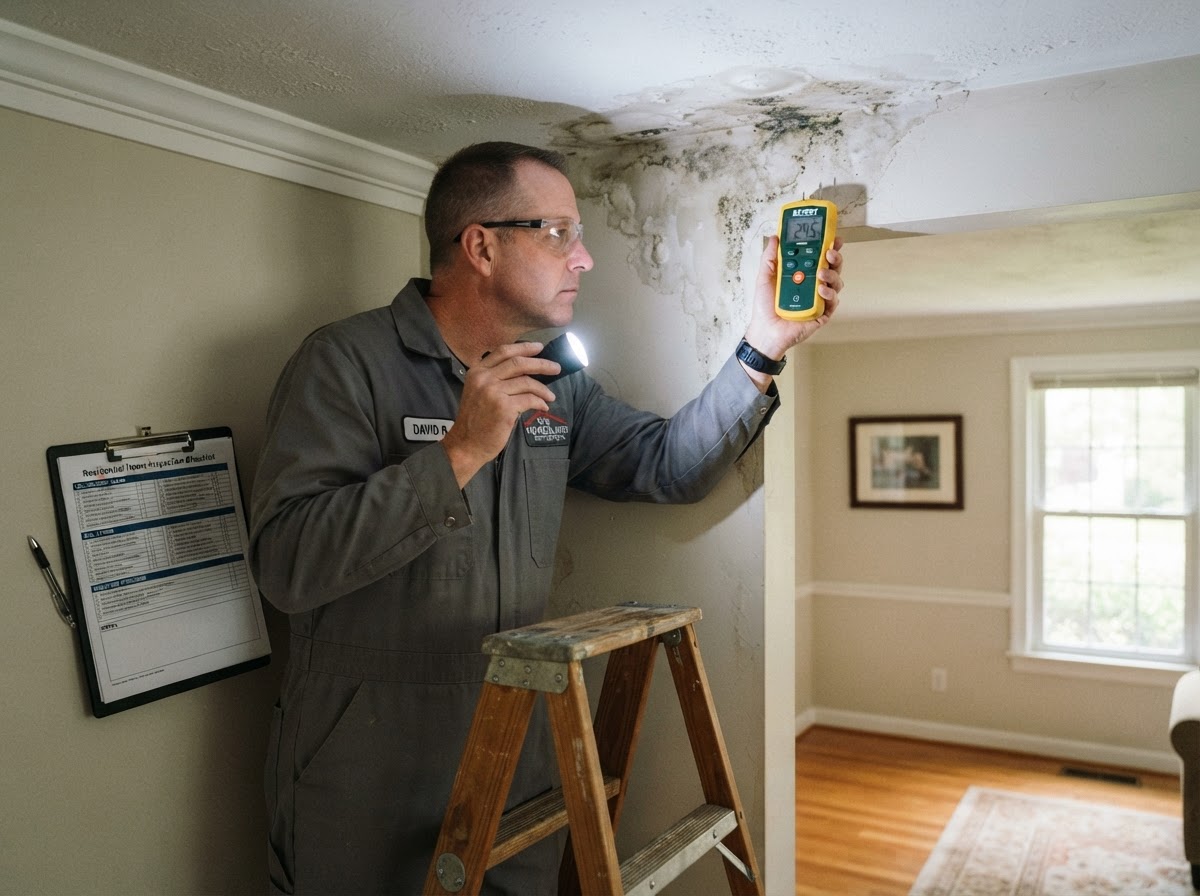
Why Mold Develops in Callender Properties
Chronic coastal fog and salt-laden marine air keep relative humidity elevated much of the year, which accelerates mold growth on stucco exteriors, in crawl spaces, and inside homes without adequate ventilation. Given 15-25 inches annually typical of the Central Coast, Callender property owners who wait until mold is visible are usually dealing with a problem that has already been developing, out of sight, for weeks or months.
Across Callender, the property mix leans toward a mix of housing types, built during a period defined by a mix of mid-century and newer construction. That combination of age and density is exactly what our teams factor in before ever setting foot on a property for an inspection.
Common Mold Risk Factors in Callender
- As an unincorporated community, Callender sees a wider mix of owner-maintained infrastructure, so drainage and roofing upkeep can vary significantly property to property
- Coastal bluff and hillside lots where drainage patterns concentrate moisture near structures
- Seasonal rental and vacation properties that sit closed up for extended periods
- Chronic coastal fog and marine-layer humidity affecting exterior stucco and interior air quality
Mold & Water Damage Services Available in Callender
Crawl Space Mold Removal in Callender
Encapsulation, vapor barrier installation, and remediation for California's most common hidden mold zone.
Attic Mold Removal in Callender
Roof-leak, ventilation, and condensation-driven mold remediation for attic spaces and roof decking.
Bathroom Mold Removal in Callender
Grout, caulk, drywall, and exhaust-ventilation remediation for the most common household mold zone.
Mold Prevention & Moisture Control in Callender
Proactive humidity control, ventilation improvements, and moisture-source correction to stop mold before it starts.
Callender Mold Removal FAQs
How common is mold in Callender homes?
Mold is a regular concern throughout Callender and the broader San Luis Obispo County area because of a mild coastal climate defined by persistent morning fog, onshore breezes, and moderate year-round humidity. While not every property develops a mold problem, the combination of local climate and building age means it's one of the more common issues our inspectors find during routine property assessments in the area.
What time of year is mold most likely to develop in Callender?
Callender's mold season generally tracks the region's wet-weather pattern (15-25 inches annually), but that's only half the picture — a slow plumbing leak or a poorly vented bathroom can start a mold colony in Callender in the middle of the driest summer just as easily as during winter storms.
Do you offer mold inspection and removal services throughout Callender?
Absolutely — Callender is fully within our San Luis Obispo County service area, alongside neighboring communities like San Luis Obispo and Paso Robles. Every job is scoped to the property in front of us, whether that's a single-family home, a multifamily building, or a commercial space.
How quickly can someone inspect a property in Callender?
For most non-emergency requests in Callender, inspections are typically scheduled within 24-48 hours. Active leaks, visible large-scale mold growth, or situations involving vulnerable occupants can qualify for expedited or same-day emergency response.
Is mold remediation in Callender covered by homeowners insurance?
Coverage hinges on the source of the moisture. A sudden covered loss — a burst pipe, a failed water heater — is usually covered up to a mold sub-limit under most California homeowners policies. Gradual issues, like a slow roof leak ignored for months, are usually excluded. Either way, our Callender inspection reports are written with insurance documentation in mind.
Nearby Areas We Also Serve
Looking for coverage across the whole region? View our full San Luis Obispo County mold removal service area.
Get a Free Mold Inspection Estimate in Callender
Local, certified mold specialists serving Callender and all of San Luis Obispo County — fast scheduling, transparent pricing, and documentation for insurance if you need it.