Bathroom Mold Removal
Grout, caulk, drywall, and exhaust-ventilation remediation for the most common household mold zone.
About Bathroom Mold Removal
Bathrooms generate more moisture per square foot than any other room in the house, which is why bathroom mold — on grout lines, caulk, ceiling drywall, and behind tile — is the single most common residential mold complaint we receive statewide. The culprit is almost always inadequate ventilation: an undersized exhaust fan, a fan that's rarely used, or ductwork that vents into the attic instead of outdoors.
Surface mold on grout and caulk is often manageable with routine cleaning, but mold that has penetrated behind tile, into ceiling drywall, or around a shower pan indicates a moisture intrusion problem that requires professional remediation and often tile or drywall removal to fully resolve.
Our bathroom remediation scope always includes a ventilation assessment — checking fan CFM rating against room size, duct routing, and termination point — because remediation without a ventilation fix simply results in recurrence within months.
Our Process
Moisture & Ventilation Assessment
We check exhaust fan capacity and routing, shower pan integrity, and grout/caulk condition.
Containment & Removal
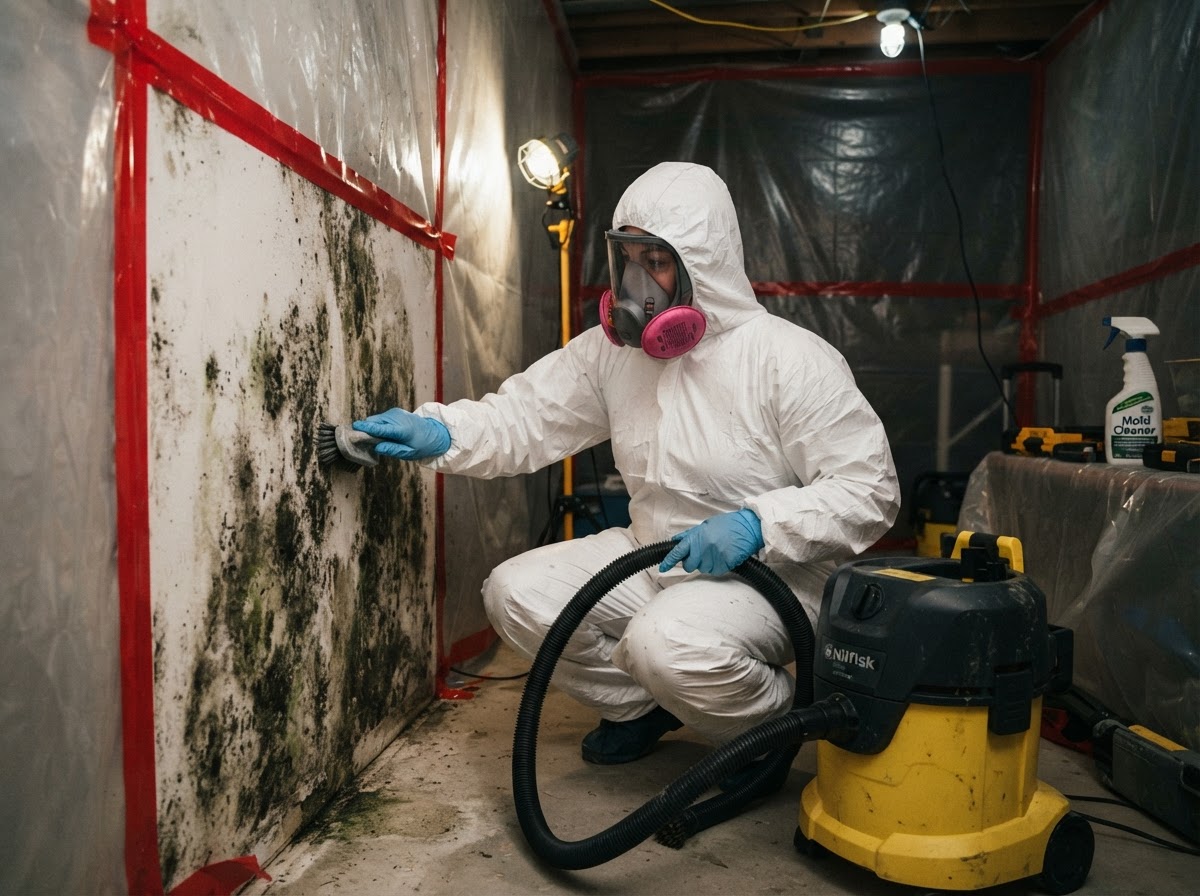
Affected tile, grout, caulk, and drywall are removed as needed within a contained work area.
Waterproofing & Rebuild
Affected areas are treated, waterproofed, and rebuilt to code with mold-resistant materials where appropriate.
Ventilation Correction
Exhaust fan upgrades or duct routing corrections are completed to prevent recurrence.
Bathroom Mold Frequently Asked Questions
Is mold on bathroom grout dangerous?
Surface mold on grout is a nuisance and should be cleaned, but it's typically a lower health risk than hidden mold growing inside walls. If cleaning doesn't resolve it or it keeps returning quickly, hidden moisture behind the tile may be the real cause.
How often should my bathroom exhaust fan run?
Industry guidance recommends running the fan during showers and for at least 20-30 minutes afterward, or installing a humidity-sensing fan that runs automatically until moisture levels drop.
Can bathroom mold spread to the rest of the house?
Yes, especially through an attic-vented exhaust fan, which can seed attic mold growth, or through subfloor moisture that travels to adjacent rooms.
Bathroom Mold Available in These California Cities
Get a Free Bathroom Mold Estimate
Fast scheduling, transparent pricing, and certified local specialists anywhere in California.