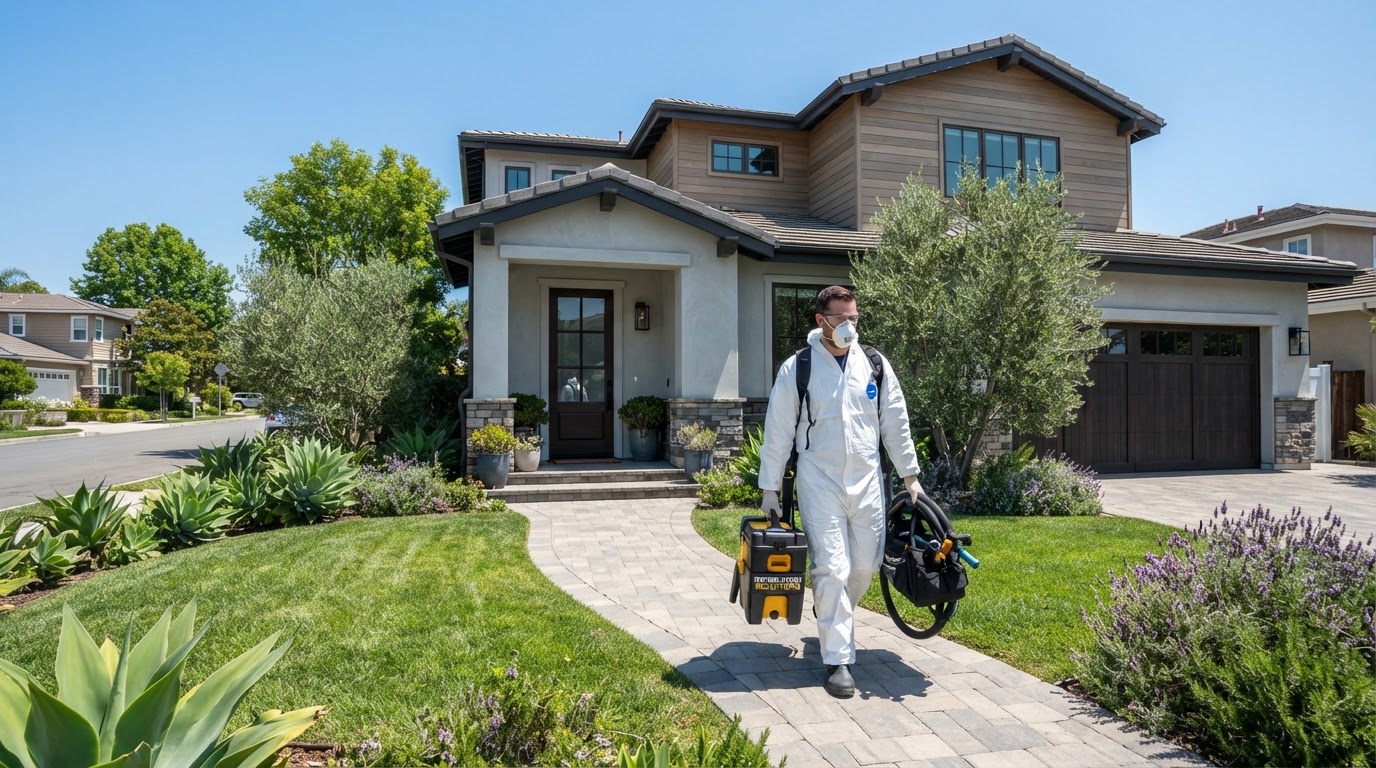
Why Mold Develops in Pleasanton Properties
Dense, older housing stock, bay-influenced humidity, and frequent winter atmospheric river storms combine to make roof leaks, condensation on single-pane windows, and slab moisture common triggers for indoor mold growth. We regularly see this pattern play out on inspections throughout Pleasanton and nearby Sunol and Dublin — mold rarely develops without an environmental or building-related trigger, and identifying that trigger is central to any effective remediation plan.
Housing stock in Pleasanton spans Gold Rush-era and early-20th-century construction alongside decades of subsequent infill, and the area's building mix — largely a blend of single-family neighborhoods and multifamily apartment communities — shapes where mold problems most commonly originate, from aging roof flashing on older homes to condensation issues in more recently built multifamily units.
Common Mold Risk Factors in Pleasanton
- Limited attic ventilation in many mid-century Bay Area homes
- Single-pane windows common in older homes, driving condensation on cold surfaces
- Bay-influenced marine humidity keeping relative indoor humidity elevated much of the year
- Hillside and hillside-adjacent lots with drainage that concentrates runoff near foundations
Mold & Water Damage Services Available in Pleasanton
Attic Mold Removal in Pleasanton
Roof-leak, ventilation, and condensation-driven mold remediation for attic spaces and roof decking.
Bathroom Mold Removal in Pleasanton
Grout, caulk, drywall, and exhaust-ventilation remediation for the most common household mold zone.
Mold Prevention & Moisture Control in Pleasanton
Proactive humidity control, ventilation improvements, and moisture-source correction to stop mold before it starts.
Indoor Air Quality Testing in Pleasanton
Comprehensive IAQ assessment covering mold spores, VOCs, and ventilation performance.
Pleasanton Mold Removal FAQs
How common is mold in Pleasanton homes?
Yes — mold shows up regularly in Pleasanton inspections, largely because of a mild, fog-influenced Mediterranean climate with cool, damp winters and dry summers moderated by the marine layer rolling in off the Bay that defines the San Francisco Bay Area. It's rarely the only issue on a report, but for a property of Pleasanton's age and construction mix, some degree of moisture-related risk is the norm rather than the exception.
What time of year is mold most likely to develop in Pleasanton?
In the San Francisco Bay Area region, mold risk tends to rise during the wetter months when ambient humidity and precipitation increase — though indoor sources like plumbing leaks, poor bathroom ventilation, or HVAC condensation can create mold-friendly conditions in Pleasanton at any time of year, independent of the outdoor season.
Do you offer mold inspection and removal services throughout Pleasanton?
Yes. Our network of ClearAir contractors serves Pleasanton and all of Alameda County, including nearby Sunol and Dublin, offering inspection, testing, and full remediation services scaled to the specific needs of local homes and businesses.
How quickly can someone inspect a property in Pleasanton?
Standard Pleasanton inspection requests are usually booked within one to two business days. If there's an active leak, standing water, or a health-vulnerable occupant on-site, we prioritize same-day emergency dispatch instead.
Is mold remediation in Pleasanton covered by homeowners insurance?
It depends on the cause. California homeowners policies generally cover mold that results from a sudden, accidental covered water loss (such as a burst pipe), often subject to a separate mold coverage sub-limit. Mold connected to long-term leaks, humidity, or deferred maintenance is typically not covered. We can help document your specific situation to support a claim either way.
Get a Free Mold Inspection Estimate in Pleasanton
Local, certified mold specialists serving Pleasanton and all of Alameda County — fast scheduling, transparent pricing, and documentation for insurance if you need it.