Commercial Mold Liability in California: What Property Owners Need to Know
From habitability law to tenant health complaints, commercial mold carries legal exposure most property owners underestimate until it's a problem.
Commercial mold issues carry a different risk profile than residential ones — the exposure isn't just remediation cost, it's tenant relations, potential legal liability, and in some cases regulatory compliance. Here's what property owners and managers across California should understand.
The legal framework: habitability and disclosure
California Civil Code Section 1941.1 establishes habitability standards for rental properties, which include maintaining units free of conditions that endanger tenant health — courts have applied this to significant, unaddressed mold problems stemming from moisture intrusion or structural defects. Separately, California's Toxic Mold Protection Act directed the state to develop permissible exposure limits and required disclosure standards, though full implementation of specific numeric standards has been an ongoing regulatory process; property owners should not assume the absence of finalized numeric standards means no disclosure or remediation obligation exists.
Where commercial exposure differs from residential
- Multiple affected parties: a single mold source in a multi-tenant building can create simultaneous complaints and potential claims from several tenants at once
- Business interruption: retail, restaurant, and office tenants may have grounds to claim lost income if remediation forces closure without adequate advance planning
- Employee health claims: workplace mold complaints can intersect with workers' compensation and OSHA-adjacent workplace safety obligations
- Documentation expectations: commercial leases frequently include specific maintenance and habitability clauses that create contractual (not just statutory) obligations
Common commercial mold sources we see
Multifamily buildings often have shared plumbing risers that can leak between units without either tenant noticing until damage surfaces. Office and retail buildings frequently have condensation issues in HVAC systems sized incorrectly for occupancy loads. Restaurants and food service face elevated humidity from cooking and dishwashing that, combined with older ventilation systems, creates chronic moisture in kitchen-adjacent spaces.
Minimizing disruption during remediation
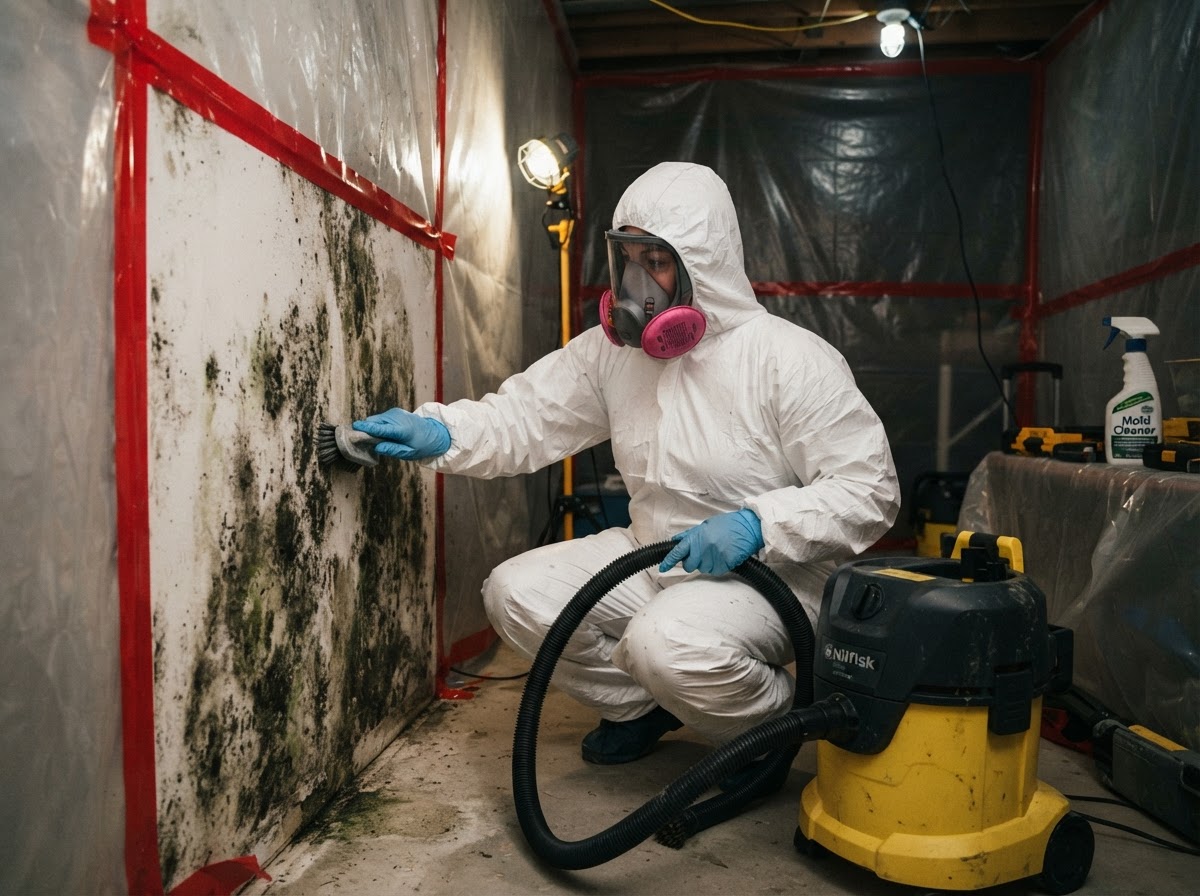
Unlike residential remediation, commercial projects usually need explicit scheduling coordination — after-hours work, weekend containment, or phased remediation that keeps part of a building operational while another section is treated. Clear communication with affected tenants about timeline and expected disruption significantly reduces the likelihood of complaints escalating to formal disputes.
Documentation that protects property owners
Thorough inspection reports, dated moisture readings, remediation scopes, and post-remediation clearance testing all serve a dual purpose: they guide the actual remediation work, and they create a paper trail demonstrating reasonable, prompt response if a tenant dispute or claim arises later.
Common Questions About Commercial Mold
Can a tenant legally withhold rent over a mold problem in California?
Under certain habitability statutes and case law, tenants may have remedies including repair-and-deduct or rent withholding for significant, unaddressed habitability violations, though the specific requirements and notice periods are technical — this is a question we'd recommend directing to a landlord-tenant attorney rather than relying on general guidance.
Are commercial property owners required to test for mold?
There's no blanket statewide requirement to test proactively, but once a mold problem is reported or reasonably suspected, prompt investigation and remediation are generally expected to meet habitability and duty-of-care standards.
How does mold remediation scheduling work for occupied commercial buildings?
Most commercial remediation is scoped around minimizing occupant disruption — after-hours work, weekend containment, and phased approaches that isolate the affected area while the rest of the building remains functional are all standard options we plan around tenant and business needs.
Need Help With commercial mold Right Now?
Our network of certified California mold specialists can inspect, test, and remediate — starting with a free estimate.

Mold Removal Services Near You
Get a Free Mold Inspection Estimate
Certified local specialists serving every California community.