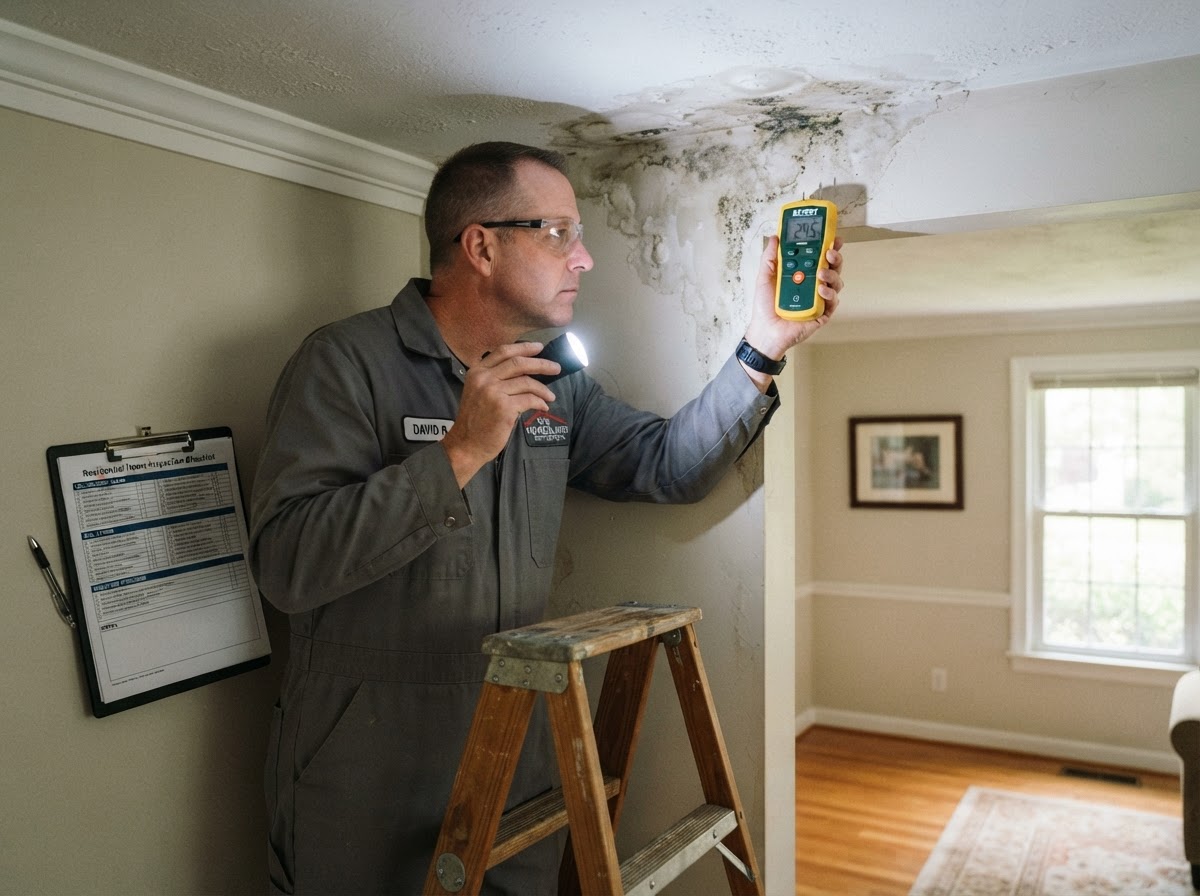
Why Mold Develops in Weed Properties
Snowmelt, ice-dam roof leaks, and rural well and septic systems are common contributors to hidden moisture problems in this region's cabins, ranch homes, and older mountain properties. Given 25-45 inches annually depending on elevation typical of the Shasta Cascade / North State, Weed property owners who wait until mold is visible are usually dealing with a problem that has already been developing, out of sight, for weeks or months.
Across Weed spread across about 4.8 square miles, the property mix leans toward larger lots, ranch and rural properties, and lower-density residential development, built during a period defined by 1960s-1980s tract housing typical of California's suburban growth era. That combination of age and density is exactly what our teams factor in before ever setting foot on a property for an inspection.
Common Mold Risk Factors in Weed
- Limited winter road access delaying repairs on storm-damaged roofing
- Seasonal cabins and vacation homes left unmonitored for long stretches
- Wood-heated homes with condensation risk around chimneys and flue penetrations
- Rural well and septic systems that can contribute to localized ground moisture
Mold & Water Damage Services Available in Weed
Mold Health Risk Assessment in Weed
Guidance connecting suspected mold exposure to symptoms, with referrals for medical and environmental follow-up.
Mold Inspection Services in Weed
Certified visual and moisture-mapping inspections that pinpoint hidden mold sources before they spread.
Mold Testing & Air Quality Sampling in Weed
Third-party accredited air and surface sampling to identify mold species, spore counts, and indoor air quality risk.
Mold Removal & Remediation in Weed
Full-scope containment, removal, and restoration following IICRC S520 protocols for safe, lasting results.
Weed Mold Removal FAQs
How common is mold in Weed homes?
Mold is a regular concern throughout Weed and the broader Siskiyou County area because of a four-season climate with wet, often snowy winters at higher elevations and hot, dry summers in the valleys. While not every property develops a mold problem, the combination of local climate and building age means it's one of the more common issues our inspectors find during routine property assessments in the area.
What time of year is mold most likely to develop in Weed?
Weed's mold season generally tracks the region's wet-weather pattern (25-45 inches annually depending on elevation), but that's only half the picture — a slow plumbing leak or a poorly vented bathroom can start a mold colony in Weed in the middle of the driest summer just as easily as during winter storms.
Do you offer mold inspection and removal services throughout Weed?
Absolutely — Weed is fully within our Siskiyou County service area, alongside neighboring communities like Mount Shasta and Gazelle. Every job is scoped to the property in front of us, whether that's a single-family home, a multifamily building, or a commercial space.
How quickly can someone inspect a property in Weed?
For most non-emergency requests in Weed, inspections are typically scheduled within 24-48 hours. Active leaks, visible large-scale mold growth, or situations involving vulnerable occupants can qualify for expedited or same-day emergency response.
Is mold remediation in Weed covered by homeowners insurance?
Coverage hinges on the source of the moisture. A sudden covered loss — a burst pipe, a failed water heater — is usually covered up to a mold sub-limit under most California homeowners policies. Gradual issues, like a slow roof leak ignored for months, are usually excluded. Either way, our Weed inspection reports are written with insurance documentation in mind.
Nearby Areas We Also Serve
Looking for coverage across the whole region? View our full Siskiyou County mold removal service area.
Get a Free Mold Inspection Estimate in Weed
Local, certified mold specialists serving Weed and all of Siskiyou County — fast scheduling, transparent pricing, and documentation for insurance if you need it.