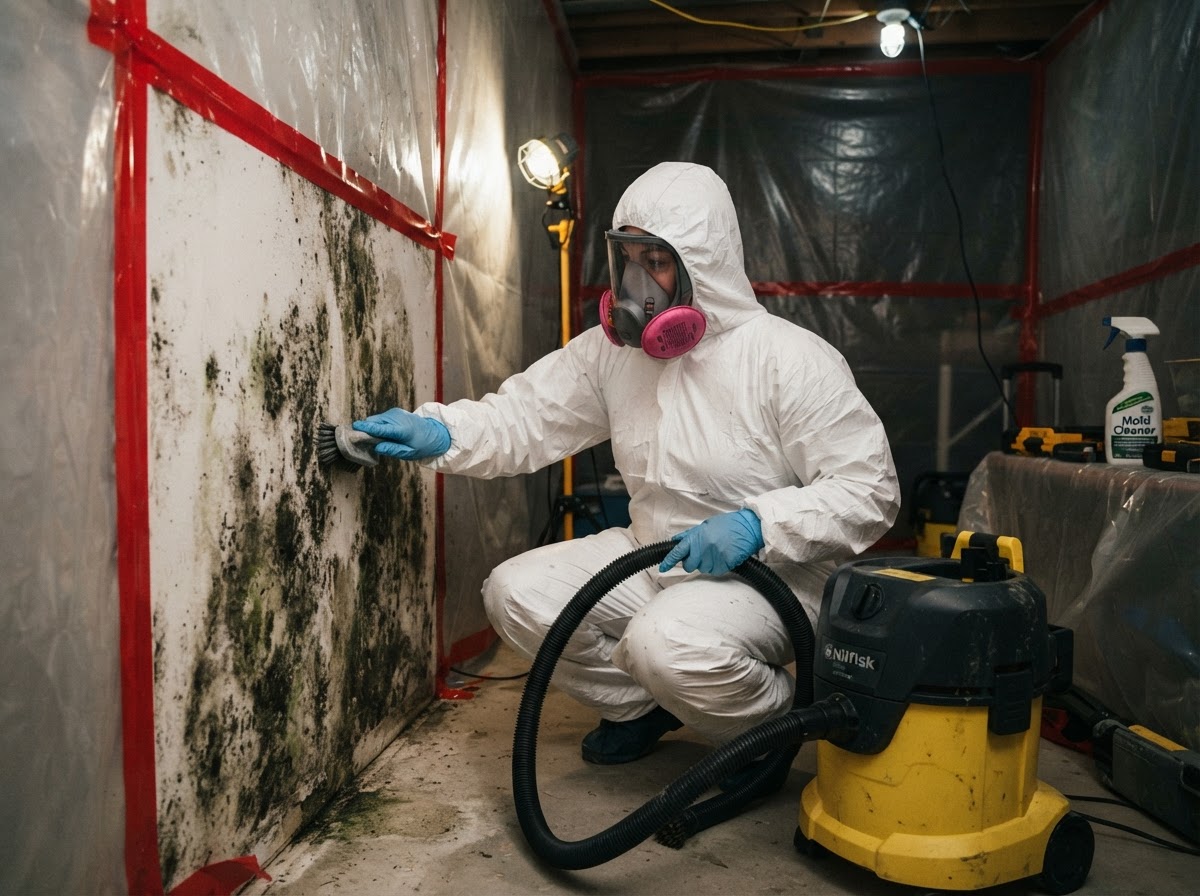
Why Mold Develops in Rolling Hills Properties
Heavy air conditioning use against condensation, aging housing stock in older urban cores, and flash flooding after intense winter storms are the primary drivers of mold calls throughout this densely populated region. For Rolling Hills specifically, this means property owners should pay close attention to ventilation performance, roof and plumbing maintenance, and indoor humidity levels — especially in the months when regional precipitation and humidity peak across Los Angeles County.
Rolling Hills is characterized by post-war and mid-century homes built during California's major suburban expansion, with larger lots, ranch and rural properties, and lower-density residential development making up the bulk of the local housing stock (roughly 582 people per square mile). Each of these property types carries its own common mold entry points — older construction is more likely to have outdated or absent vapor barriers and ventilation, while newer construction can still develop mold if HVAC systems or exhaust ventilation are undersized or improperly installed.
Common Mold Risk Factors in Rolling Hills
- Aging urban housing stock with deferred plumbing maintenance
- Flash flooding after infrequent but intense winter storms
- Large day-to-night temperature swings driving condensation cycles
- Slab leaks in older inland-empire tract housing going unnoticed for months
Mold & Water Damage Services Available in Rolling Hills
Mold Health Risk Assessment in Rolling Hills
Guidance connecting suspected mold exposure to symptoms, with referrals for medical and environmental follow-up.
Mold Inspection Services in Rolling Hills
Certified visual and moisture-mapping inspections that pinpoint hidden mold sources before they spread.
Mold Testing & Air Quality Sampling in Rolling Hills
Third-party accredited air and surface sampling to identify mold species, spore counts, and indoor air quality risk.
Mold Removal & Remediation in Rolling Hills
Full-scope containment, removal, and restoration following IICRC S520 protocols for safe, lasting results.
Rolling Hills Mold Removal FAQs
How common is mold in Rolling Hills homes?
Yes — mold shows up regularly in Rolling Hills inspections, largely because of a hot-summer Mediterranean and semi-arid climate with large day-to-night temperature swings and infrequent but sometimes severe winter rain that defines the Southern California Inland / Inland Empire. It's rarely the only issue on a report, but for a property of Rolling Hills's age and construction mix, some degree of moisture-related risk is the norm rather than the exception.
What time of year is mold most likely to develop in Rolling Hills?
In the Southern California Inland / Inland Empire region, mold risk tends to rise during the wetter months when ambient humidity and precipitation increase — though indoor sources like plumbing leaks, poor bathroom ventilation, or HVAC condensation can create mold-friendly conditions in Rolling Hills at any time of year, independent of the outdoor season.
Do you offer mold inspection and removal services throughout Rolling Hills?
Yes. Our network of ClearAir contractors serves Rolling Hills and all of Los Angeles County, including nearby Los Angeles and Long Beach, offering inspection, testing, and full remediation services scaled to the specific needs of local homes and businesses.
How quickly can someone inspect a property in Rolling Hills?
Standard Rolling Hills inspection requests are usually booked within one to two business days. If there's an active leak, standing water, or a health-vulnerable occupant on-site, we prioritize same-day emergency dispatch instead.
Is mold remediation in Rolling Hills covered by homeowners insurance?
It depends on the cause. California homeowners policies generally cover mold that results from a sudden, accidental covered water loss (such as a burst pipe), often subject to a separate mold coverage sub-limit. Mold connected to long-term leaks, humidity, or deferred maintenance is typically not covered. We can help document your specific situation to support a claim either way.
Nearby Areas We Also Serve
Looking for coverage across the whole region? View our full Los Angeles County mold removal service area.
Get a Free Mold Inspection Estimate in Rolling Hills
Local, certified mold specialists serving Rolling Hills and all of Los Angeles County — fast scheduling, transparent pricing, and documentation for insurance if you need it.